

What Hong Kong reveals about nature's role in urban resilience
DPhil student Ashley Bang discusses a new study which has mapped the climate and nature trade-offs resulting from urbanisation, showing how an interdisciplinary approach to urban planning is critical for maintaining future resilience.
From storms and floods to wildfires and heatwaves, communities around the world have felt the impacts of the joint climate and nature crises. This has been particularly evident in urban areas, which are home to approximately 58% of the world’s population1. Our research explored how environmental action for the climate and nature crisis can be balanced alongside urban development needs.
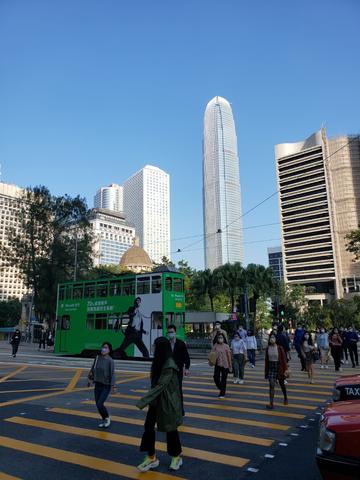
Urban areas are highly vulnerable to the risks of climate change, but concentrate the decision-making stakeholders and financial systems that address challenges.
Image: Ashley Bang
Cities are a fascinating research system, as they are main characters in both the problem and the solution. Urban areas are highly vulnerable to the risks of climate change, drive a large proportion of environmental change, yet also concentrate the decision-making stakeholders and financial systems that address these challenges.
Hong Kong offers a unique case study to explore these issues. It has more skyscrapers than any other city in the world, but at the same time protects 40% of its land for wildlife2 – a conservation win amongst many urban contexts.
Nature-based solutions are actions that protect, sustainably manage, or restore natural ecosystems in ways that benefit both people and nature. For Hong Kong, this could range from the restoration of coastal mangroves to the greening of downtown areas. But what are the tangible benefits that nature-based solutions could offer for Hong Kong, now and in the future?
To explore this, we mapped and modelled some of these benefits – carbon storage, natural habitat provision, and flood protection – under future scenarios of urbanisation by 2030. Results showed Hong Kong’s natural landscapes currently offer large contributions for carbon storage which are not yet factored into climate action plans (~10.9 MtC).
Under future scenarios of intensive real estate development, these benefits are greatly reduced when natural habitats are sacrificed for urban expansion. It highlights the importance of exploring alternative pathways: for example, re-developing existing built-up areas or disused barren land rather than converting intact natural habitats.
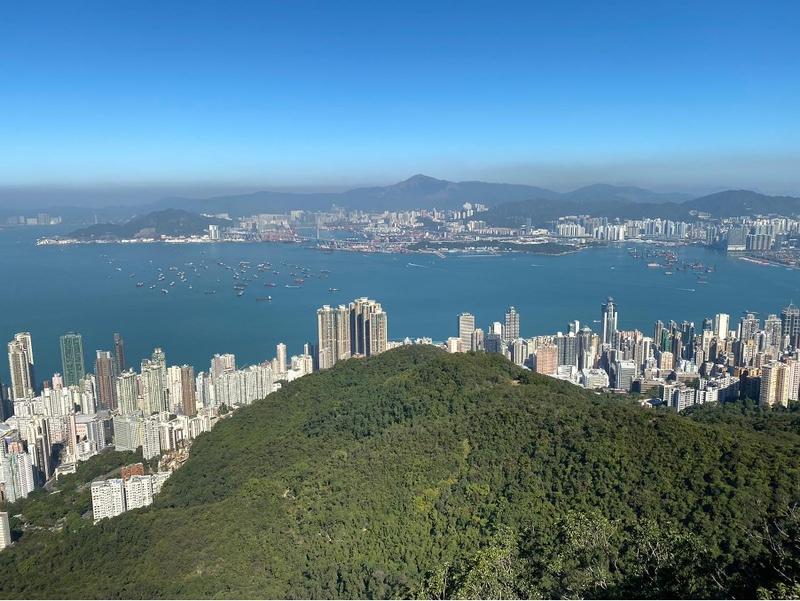
Hong Kong has more skyscrapers than any other city, but protects 40% of its land for wildlife.
Image: Ashley Bang
In the study, we highlighted priority areas for nature-based solutions in Hong Kong: places where these solutions would best reduce climate change risks for urban developments while maximising benefits for nature. One such area is the Mai Po Wetland Reserve, a vital habitat for Asian migratory bird species and Hong Kong’s most effective carbon sink – but also one of the most vulnerable locations to urban flood damage. Protecting and restoring Mai Po’s wetlands would provide crucial protection for neighbouring urban developments, such as the ongoing Northern Metropolis development, while helping Hong Kong make meaningful strides towards its climate and biodiversity goals.
While trade-offs may ultimately be inevitable at the interface between nature, climate and society, the research has demonstrated the positive role that nature-based solutions can play in harnessing win-win opportunities in urban areas.
As cities around the world continue to expand and grapple with the interconnected social and environmental challenges, this research adds to growing evidence that protecting and restoring nature are an essential pillar of resilient urban planning in a changing climate.
1. UN DESA (2025) World Urbanization Prospects 2025
2. HKSAR Government (2026) Hong Kong Biodiversity Strategy & Action Plan 2035
To read more about this research, published in Land Use Policy, visit: https://www.sciencedirect.com/science/article/pii/S026483772600476X

