

Ig Nobel Prize for research on the evolution of kissing
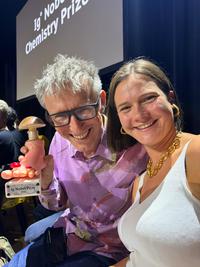
Dr Matilda Brindle and Professor Stuart West, along with their colleague Catherine Talbot of Florida State University, have been awarded an Ig Nobel Prize for research published last year on the evolution of kissing. The Ig Nobel Prize honours achievements so surprising that they make people laugh, then think. The prizes are intended to celebrate the unusual, honour the imaginative, and spur people’s interest in science, medicine, and technology. The 2026 Ig Nobel Prizes were awarded at a ceremony on 3 September.
The study being celebrated, published in November 2025, found evidence that kissing evolved in the common ancestor of humans and other large apes around 21 million years ago, and that Neanderthals likely engaged in kissing too.
Kissing occurs in a variety of animals, but presents an evolutionary puzzle: it appears to carry high risks, such as disease transmission, while offering no obvious reproductive or survival advantage. Despite kissing carrying cultural and emotional significance in many human societies, little attention has been paid to its evolutionary history.
The study also involved first defining what constitutes a kiss. This was challenging, because many mouth-to-mouth behaviours look like kissing. They ended up by defining kissing as non-aggressive, mouth-to-mouth contact that did not involve food transfer.
Matilda says:
“I’m absolutely thrilled that our research has been selected for an Ig Nobel. I hope that, as well as finding the research amusing, people will come away thinking a little differently about our place in the animal kingdom. So many of the behaviours we think of as uniquely human have deeper evolutionary roots than we might imagine, and there’s still so much more that we don’t know.
Curiosity for its own sake is fundamental to how science moves forward. The Ig Nobels are a wonderful reminder that sometimes the most unexpected paths can lead to the most interesting discoveries.”
Stuart says:
“It is great to see ancestral state reconstruction being recognised in an award for science communication."
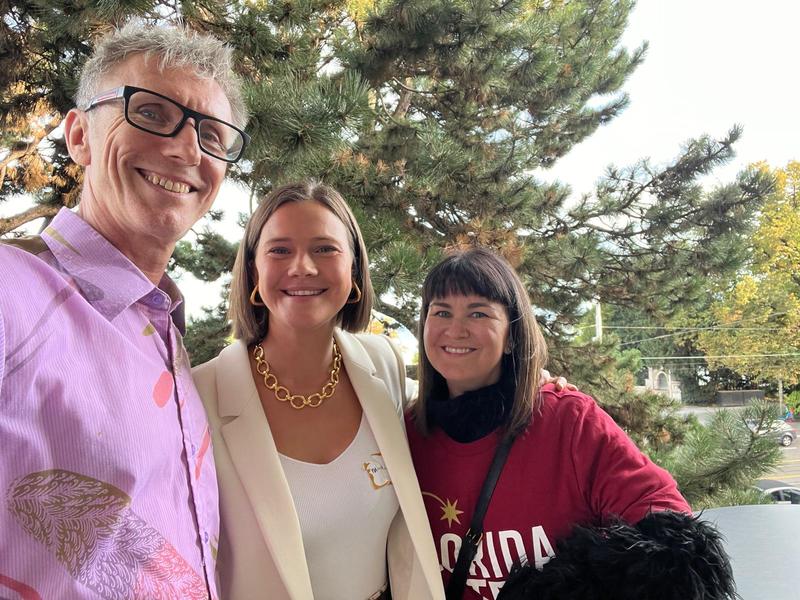
Ig Nobel winners Stuart, Matilda, and their colleague Catherine Talbot from Florida State University

