

New pigeon lofts mark the next chapter of research at the John Krebs Field Station
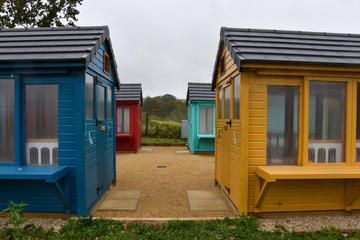
Four new purpose-built pigeon lofts have been officially opened by the Vice-Chancellor, Professor Irene Tracey, at the John Krebs Field Station, expanding capacity for pioneering research into bird navigation while also celebrating the legacy of the late Professor Graham Taylor.
The new field station director, Dr Steve Portugal hosted the opening event, in which Professor Lord John Krebs - after whom the Field Station is named - join the Vice-Chancellor, researchers, students and colleagues, to mark an important step in the wider regeneration of the site.
The new lofts increase capacity for keeping homing pigeons at the field station by 200 per cent and will support a £1 million BBSRC-funded research project investigating what birds attend to when navigating.
The research aims to better understand the information birds use to find their way through the landscape and how changes in land use may affect their navigation, including the potential risk of collisions with human-made structures. It continues a remarkable 40-year history of navigation and flight research at the field station using homing pigeons as a model system.
A lasting legacy
The opening had particular significance for colleagues because the original concept and design for the new lofts came from the late Professor Graham Taylor, who helped set the project in motion but did not live to see the facilities completed.
Speaking at the opening, the Vice-Chancellor reflected on her own memories of Graham and acknowledged what had been a difficult year for his colleagues.
“Thank you for getting through what I know has been a really tough year,” she said. “I met with Graham just a couple of weeks before he passed, and he was someone who, like you all, I had the greatest amount of admiration for and I had my eyes on him for all sorts of different leadership roles, which I wanted to bring him in to do, because of his extraordinary breadth of talents and gifts, and it is such a loss to his wife and children and to us all.”
The new lofts were opened with a ribbon cutting which coincided with pigeons being released above, providing a fitting moment in Graham’s memory, recognising his role in bringing the project to life and his wider contribution to research at the field station.
https://www.youtube.com/embed/r57NfNQpW60?si=nOZJIeR2PLkqS9Xf
Investing in research at the field station
The new lofts form part of a larger programme of improvements, primarily funded through the Minor Capital Plan budget with additional support from Principal Investigator funds of the new director of the John Krebs Field Station – Dr Steve Portugal.
Alongside construction of the four lofts, the project has included a large-scale reconfiguration of the Marian Stamp Dawkins Building to improve research facilities.
The investment will not only support the current BBSRC project but also increase the field station’s capacity to attract external fellowships and secure future research funding.
It represents the beginning of a wider regeneration of the John Krebs Field Station, ensuring its facilities can continue to support ambitious research and the training of future generations of scientists.
The improvements have also provided an opportunity to enhance biodiversity at the site through the creation of native flower meadows, bringing benefits for wildlife alongside the investment in research infrastructure.
From pigeons to bees and fish
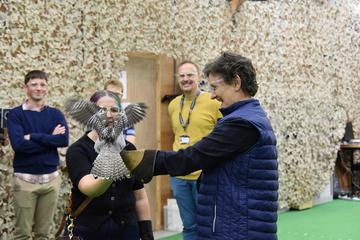
During her visit, the Vice-Chancellor revealed that her own interest in birds goes back many years, telling guests that she is a lifetime member of the RSPB and has a particular love of birds of prey.
She welcomed the research taking place at the Field Station and its contribution to understanding how animals respond and adapt to environmental change.
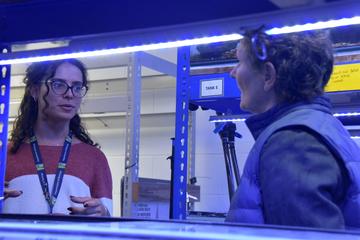
The Vice-Chancellor’s visit extended well beyond the new pigeon facilities. She toured the flight laboratory as well as the fish and bee laboratories, meeting DPhil students and hearing directly from them about their research projects.
The tour showcased the breadth of animal behaviour research taking place at the Field Station and the specialist facilities that enable researchers and students to investigate how animals perceive, navigate and interact with their environments.
With increased capacity, improved facilities and further regeneration of the site beginning, the new pigeon lofts represent both a continuation of the Field Station’s long research heritage and an investment in its future.

