

Dr Alexandra Zimmermann awarded Midori Prize for Biodiversity
Dr Alexandra Zimmermann has received the Midori Prize for Biodiversity, recognising more than 25 years of global leadership in human-wildlife conflict and coexistence. The Midori Prize, established by the AEON Foundation and co-hosted by the UN Convention on Biological Diversity, recognises a body of work that demonstrates the role universities can play in taking ideas developed through research far beyond academia — into conservation practice, international institutions, and global biodiversity policy.
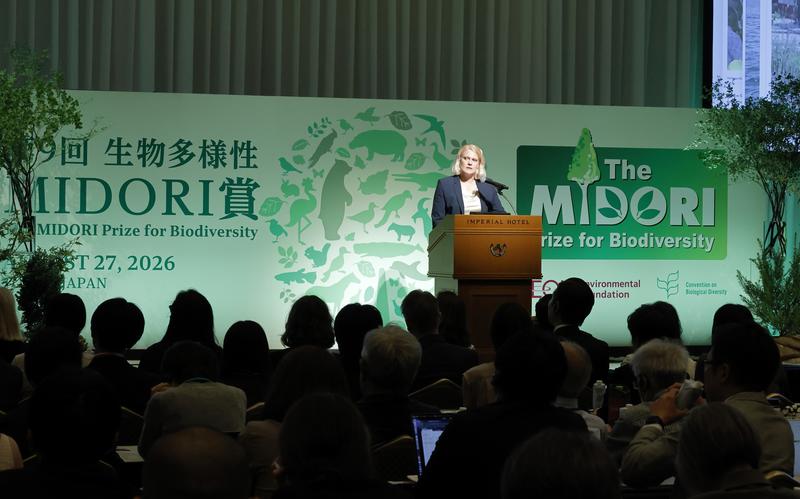
The award recognises Alexandra’s role in advancing human-wildlife coexistence as a global policy priority for biodiversity conservation, and a career connecting research, conservation practice and international policy.
Her work has helped reshape how complex human-wildlife conflicts are understood and addressed, showing that the most difficult cases are often not simply conflicts between people and wildlife, but conflicts among people over wildlife, conservation, livelihoods, responsibilities and decisions. She has also advanced approaches from peacebuilding and conflict resolution within biodiversity conservation, bringing greater attention to relationships, trust, dialogue, decision-making and the processes through which difficult conservation conflicts are addressed.
Across her career, she has combined academic research with direct application in conservation practice and policy, translating interdisciplinary thinking into practical approaches, international guidance, professional capacity and institutional change. She founded the IUCN SSC Human-Wildlife Conflict & Coexistence Specialist Group, and under her leadership the Group has built an international network, developed international guidance, and strengthened the conservation community’s capacity to address human-wildlife conflict as both a conservation and societal challenge.
Alexandra says:
“The UN’s vision of “living in harmony with nature” requires us to look beyond the surface of human-wildlife conflicts and examine the relationships and underlying social tensions that determine whether coexistence is possible. To do that, we need to bridge natural and social sciences, local knowledge and policy more effectively, and draw on approaches from peacebuilding and diplomacy to work with communities, institutions and decision-makers”.

