

Evolutionary Biology of Antimicrobial Resistance
About
Antibiotics have made a massive contribution to human health by reducing the mortality and economic costs associated with bacterial disease. Unfortunately, antibiotic resistance in pathogenic bacteria threatens to undermine the clinical utility of antibiotics and we are currently faced with the ominous possibility of a post-antibiotic era.
The MacLean Lab studies the ecology and evolutionary biology of antibiotic resistance in pathogen populations. By understanding the eco-evolutionary processes that drive resistance, we aim to develop new, evolution-informed strategies to control and prevent it. Our research combines laboratory experiments, genomic analysis, and the study of samples from clinical settings to connect fundamental science with real-world health challenges.
Bacterial interactions and antibiotic resistance
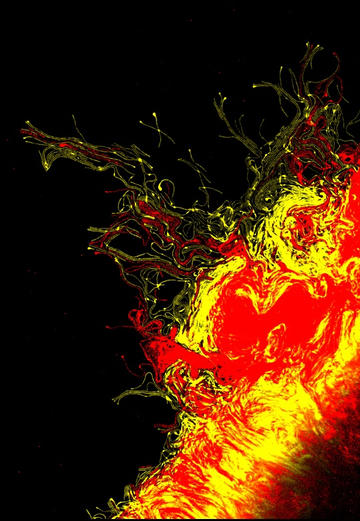
Bacterial infections are often caused genetically complex populations consisting of multiple pathogen strains. We are interested in understanding how co-infecting strains interact with each other, and how these interactions shape responses to antibiotics.
Plasmids as drivers of resistance
Many of the most important antibiotic resistance genes are found on plasmids, autonomously replicating circles of DNA that can jump between bacterial strains and species. We are interested in understanding why resistance genes are on plasmids, and how plasmids spread and persist in bacterial populations.
Phage as a tool to eliminate antibiotic resistance
Bacteriophage are viruses that infect and kill bacterial cells. We are increasingly interested in how bacteriophage can be effectively harnessed to eliminate antibiotic resistance from pathogen populations. Much of our work in this area is focused on phage that infect plasmid-carrying bacteria, and how these phage can be used to block the transfer of resistance genes between bacteria.
Predicting the potential for adaptation to new antimicrobials
The resistance crisis is driving the development of novel antimicrobial compounds. We are interested in developing tools to help predict the potential for pathogenic bacteria to adapt to novel antimicrobials. Understanding how bacteria adapt to new antibiotics should make it easier to predict and minimise resistance emergence when new antibiotics are used clinically.
People
Publications
News

