

Unlocking the value of biodiversity in the UK and Ireland
A new economic report analysing the financial impact of sequencing all complex life in the UK and Ireland has shown a huge return on investment and expected growth in scientific research
Sequencing the DNA of all complex life in the UK and Ireland could generate up to almost £3 billion for the economy across agriculture, conservation, and research over the next 30 years, according to a new report.
The Darwin Tree of Life Project, a collaboration including experts at the University of Oxford as well as the Wellcome Sanger Institute, the Natural History Museum, and many others, aims to sequence the DNA of all findable eukaryotic organisms in the UK and Ireland, including animals, plants, and fungi, totalling an estimated 30,000 species.
A new report has calculated how much this revolution in biology will benefit the UK economy through things such as improving crop resilience and pest control on farms, advances in medicine and biotechnology, and more efficient conservation projects.
This report showcases the substantial return on investment that the project offers. It highlights how the Darwin Tree of Life Project has already saved the global scientific community £55 million in research costs to date by providing over 2,500 reference genomes for open access use.
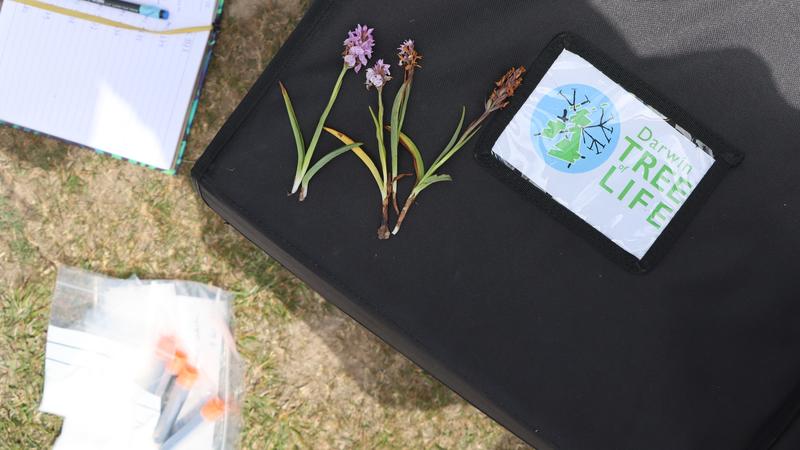
Heath Spotted-orchids collected during plant sampling at Kynance Cove on the Lizard, Cornwall, carried out by a team from the Royal Botanic Gardens Kew, a partner on the Darwin Tree of Life project. The activity also served as a public engagement activity, building relationships with a local botany group.
Image: Luke Lythgoe / Wellcome Sanger Institute
The instructions for every living thing are found in its DNA, along with its genetic story, tracking where it came from, how it evolved to adapt to new challenges, and how it might handle such changes in the future.
The Human Genome Project decoded this for humans, and in turn, revolutionised science and medicine, generating more than $750 billion in economic activity from a $4 billion investment. The Darwin Tree of Life Project, which started in 2019, aims to do the same for all the species around us in the UK and Ireland, and contribute to the wider, global Earth BioGenome project.
The report has identified three key areas where the economic impact will be felt:
- An estimated £800 million–£1.4 billion could be gained in UK agriculture over the next 30 years. High-quality reference genomes can be used to help find new ways to improve crop resilience, tackle invasive pests, ensure the sustainability of fish stocks, and find new ways to treat livestock diseases. For example, currently the UK’s Centre for Environment, Fisheries and Aquaculture Science uses the sole and plaice genomes to improve and inform UK fishing quotas, focusing on long-term sustainability.
- An estimated benefit of £1.3 billion to UK ecosystem services from using Darwin Tree of Life reference genomes to identify threatened species, shape management decisions, and improve the success of conservation projects. For example, the pine hoverfly genome has been used in a successful species reintroduction and captive breeding effort conducted by the Royal Zoological Society of Scotland in the Cairngorms.
- An estimated £170 million– £340 million benefit to the research and innovation sector, through direct savings and reinvestment of funding into valuable research. The Darwin Tree of Life project will also stimulate innovation in specific technologies, including the biodiversity monitoring market, projected to reach $137 million globally by 2032. Darwin Tree of Life reference genomes can also help uncover the next generation of medicines and biomaterials in the genes of species around us. For example, harnessing the genes that enable spider silk to be stronger than steel, gram-for-gram, to develop new biomaterials or understanding more about a bat’s highly efficient immune system to help inform human medicine.
Additionally, the Darwin Tree of Life Project has supplied 30 per cent of the world's biodiversity genomes, making it a world-leader in genomic research. The project also provides open-access protocols, tools, and training to biodiversity genomics programmes worldwide, with experts advising on international projects including those in Norway, Brazil, and Australia.

Common Bluebell growing at the University of Oxford's Wytham Woods site.
Image: Luke Lythgoe / Wellcome Sanger Institute
Professor Owen Lewis, who works on the project at Oxford Biology, said:
"The University of Oxford has played a key role in the Darwin Tree of Life project through our work at Wytham Woods, one of the UK's best-studied and most diverse ecosystems. Hundreds of species from Wytham — especially insects — have now had their complete genomes sequenced at exceptionally high resolution and the resulting data are already providing novel insights into how species evolve and interact in real ecosystems. The new report highlights the excellent return on investment from this fundamental research, spanning biotechnology, agriculture, conservation, and medicine."
Professor Mark Blaxter, Head of the Tree of Life Programme at the Wellcome Sanger Institute, said: “The Darwin Tree of Life Project is an ambitious project, and one that many of us have always believed would fundamentally change biology by decoding all life in Britain and Ireland. This report shows that our project will also have a significant beneficial financial impact over the next 30 years, highlighting how much it pays to invest in understanding and protecting biodiversity, improving conservation, and generating knowledge that benefits both people and the living world around us.”
To read the full report, published in Frontier Economics, visit: https://doi.org/10.5281/zenodo.19472560
To read the full press release, see the Wellcome Sanger Institute website: https://www.sanger.ac.uk/news_item/unlocking-the-value-of-biodiversity-in-the-uk-and-ireland/

