

If life science research needs fieldwork, it also needs equitable credit
Dr Daniel Hending calls for more equitable practices in life science research to assign appropriate credit to fieldworkers. To read more, see his full letter published in Biodiversity and Conservation.
Fieldwork is at the heart of much ecological and biodiversity research, and life science research more generally. Yet too often, the people who do this physically and mentally challenging work are under- or uncredited in academic outputs.
I’m a field biologist who has experienced this during my own career, but I’m far from alone – it’s something that is particularly true for projects focused in the Global South where local field assistants, technicians, and participants are hired for fieldwork. From behavioural observations, habitat assessments, and sample collection to equipment deployment/maintenance and social surveys, fieldwork in the life sciences is wide-ranging. Locations are often environmentally challenging (e.g., very hot or cold!), remote, and potentially dangerous, and this can take a heavy toll on the physical, mental, and social wellbeing of fieldworkers. Despite this, when research outputs are written up and published, these efforts often go unacknowledged.
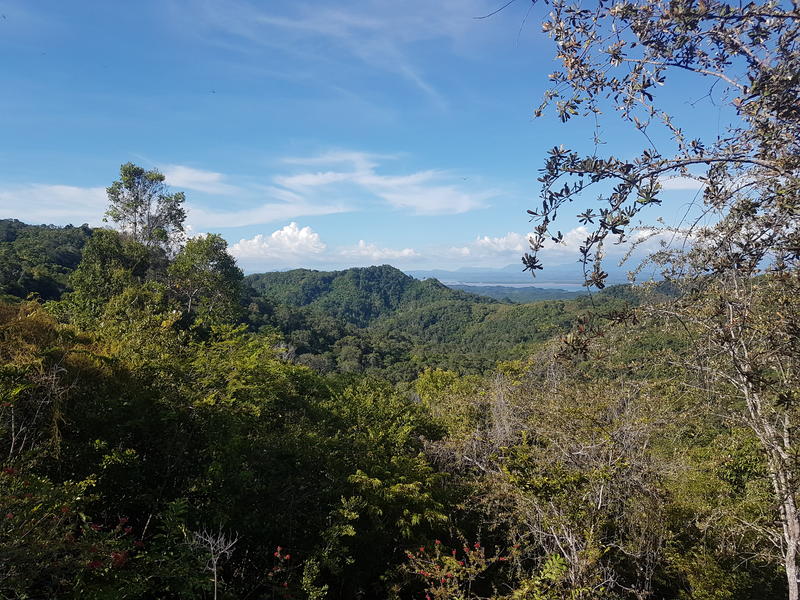
Anabohazo Forest, Northwest Madagascar, is one of my main fieldwork sites. The terrain here is very remote and steep, and the area can reach over 45°C and 95% humidity during the wet season, making fieldwork rather uncomfortable!
Publish or perish
Many life science projects are simply not possible without extensive periods of fieldwork, and important scientific insights often emerge directly from fieldwork itself. However, when publishing papers there is a heavy mandatory emphasis on conceptual, analytical, and writing contributions rather than data collection (be it in the field or lab). Contributors who make research possible through fieldwork are rarely reflected in authorship lists, even when they critically shape the data. This disproportionately affects the career prospects of fieldworkers, the vast majority of whom are early-career researchers, local collaborators, and individuals from under-represented regions.
Contributors miss out on the recognition and professional credit that is vital for them to advance their careers – in academia’s current “publish or perish” state, merit is often based solely on the number of publications someone has. This facilitates a system where only certain types of work, such as manuscript writing and data analysis, are seen as “real research,” while the foundational labour of field-based data collection is sidelined or dismissed. While there is now some attention on how large field-based research projects often forge unequal credit structures, especially for collaborations between Global North and Global South participants, authorship guidelines still fail to recognise the diverse forms of contributions.
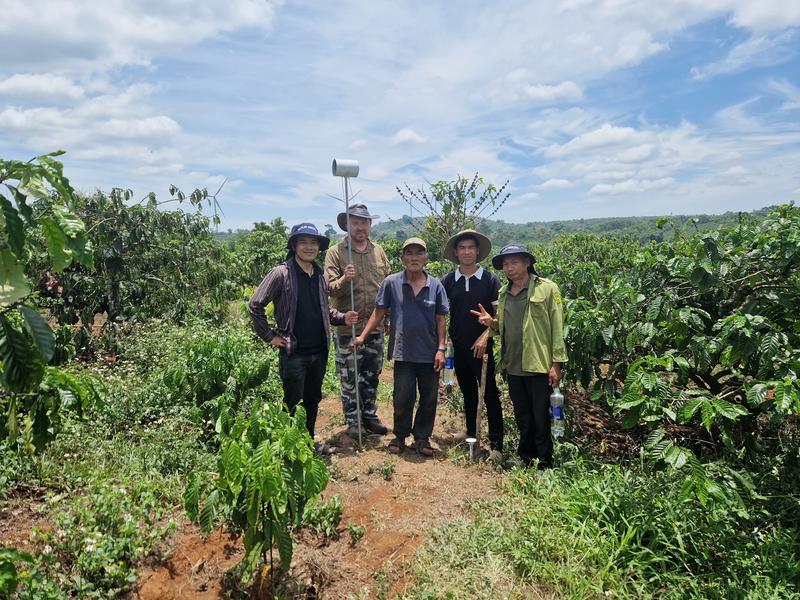
Coffee agroforests in Ea H'leo District, Dak Lak, Vietnam. Fieldwork almost always involves a large team of scientists, guides, and other local experts, all of whom are paramount to the success of field-based research.
Addressing the problem
Collaborative efforts across the life sciences have explored how alternative authorship models may improve the situation and have held discussions on how credit can be expanded and reported beyond traditional author lists. Some academic journals and institutions are now trialling detailed contribution statements where each participants role and contributions are clearly listed, and although far from a universal solution, this does encourage more equitable practice.
For all those involved in life science research, from undergraduate students wishing to carry out their first field trip to seasoned professors leading long-term and/or multinational projects, everyone can consider how to improve equity:
- Discuss contributions early in project planning with all participants and document them clearly.
- Use detailed contributor role statements whenever possible to ensure that all roles and contributions are credited appropriately.
- Recognise and value fieldwork as a form of intellectual and practical contribution.
- Support inclusive authorship practices that reflect all contributors’ efforts.
Fairer science is better science
Ultimately, fair and transparent recognition and credit practices improve scientific quality and make working conditions better for all. When contributors know their work will be acknowledged meaningfully, they are more likely to engage deeply, share insights, and invest their time and skills in long-term projects. This is especially relevant in biological research, where long-term field studies and local ecological knowledge are critical yet often under-resourced.
Scientific research is a collective endeavour and credit should reflect this. Field researchers pour their blood, sweat, and tears into science (literally!). By acknowledging these vital contributions, we can move toward a more equitable and accurate system of credit; this is not just a matter of fairness, it is an important step towards stronger, more inclusive, and more impactful science.
To read more about this topic, see Dan’s full letter published in Biodiversity and Conservation: https://doi.org/10.1007/s10531-025-03240-5

