

Molecular Signalling in Plant Development
About
Our central question is: how do molecular signalling mechanisms evolve to affect plant development? To address this, we study comparative reproductive tissue development in both crops and non-cultivated plant species. Specifically, we aim to unravel mechanisms of hormonal and genetic interactions responsible for morphological and reproductive diversity.
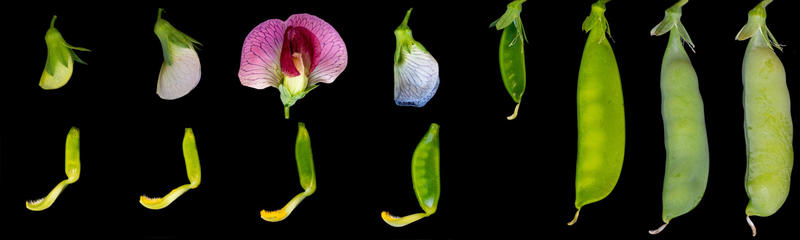
Model system
Legume crops comprise a globally important source of protein-rich and high-quality food with a vast diversity of crop types suited for highly different environments. Moreover, growth of legumes reduces environmental impact with lower emissions of greenhouse gasses and diminished use of N fertiliser. The potential for legumes to play a major role in future cropping systems is therefore immense.
In our laboratory, we primarily focus our work on pea (Pisum sativum L.). Pea is an important crop plant species with an extensive history in genetics research, and a useful model for legume crops in general. Part of our efforts involve building genetic resources directly in pea allowing us to study the genetic and molecular basis of important crop characteristics that may be of important to fulfil the potential of other legume crops. Such fundamental understanding of plant growth and development puts us in an ideal position to develop next-generation breeding material and address global challenges connected to food security and sustainable agriculture.
A blend of strategic and curiosity-driven research
In contrast to the model plant Arabidopsis thaliana, which produces bicarpellate (two-chambered) fruit with many small seeds, pea produces monocarpellate (single-chambered) fruit (or pods) with comparatively larger but fewer seeds. Deciphering the seed/pod molecular conversation that regulates pea reproductive development may therefore lead to the discovery of alternative signalling systems. Moreover, given the important role of legume crops in the provision of plant-based protein and in achieving low-input agriculture, the improvement of legume crops has wide environmental and health implications.
An auxin variant affecting pea pod growth
How multicellular organisms coordinate growth of reproductive structures with the development of their offspring, are areas of fundamental importance to understand the processes underlying reproductive biology. We work to reveal the mechanism by which a halogenated auxin variant (4-Cl-IAA) mediates its function as an inter-generational fertility signal in a subclade within the Fabaceae (legume) family including pea. To this end, we aim to elucidate synthesis, signalling and evolution of this auxin variant providing knowledge on hormonal control of offspring-to-parent communication and the formation of signalling pathways. Given the significant strategic potential of the proposed work, we are keen to exploit the obtained knowledge to advance legume agronomy and explore potential for drug development in the medical industry.
People
Publications
News

